 teasa.ai


In this guide
Character.AI filed for Chapter 11 on 12 October 2026. It stays up while the company is sold, with the sale expected to finish by early December. Is Character AI shutting down? covers what that means for your chats and subscription, and how to back up your chats and characters now.
What Character.AI is
Character.AI was founded in 2021 by Noam Shazeer and Daniel De Freitas, two former Google engineers who left after the company declined to release a chatbot they'd built internally. The bet paid off in an unusual way: in August 2024, Google paid $2.7 billion to license Character.AI's technology and hire Shazeer, De Freitas and part of the research team back into DeepMind, without buying the company itself. Character.AI kept operating independently, building creator-made Scenes, memory tools and Lorebooks for worldbuilding. By 2026 the platform counted more than 20 million monthly active users, down from a mid-2024 peak of 28 million, on roughly $32.2 million in annual revenue; its c.ai+ subscription runs $9.99 a month, and a lighter c.ai lite plan costs $4.99 a month in the US. On 12 October 2026 the company filed for Chapter 11 to sell itself under court supervision; the platform stays up during the sale, and Character.AI says it will be wound down if no bid allows it to continue.
The bigger recent change is who's allowed in. Character.AI began removing open-ended chat for users under 18 on a rolling basis through November 25, 2025, after mounting legal and regulatory pressure. The company's own announcement says under-18 accounts keep access to Stories, video creation and streams with Characters, but not open-ended roleplay conversation — a structural shift for a platform whose entire pitch had been free-form chat with any Character.
Character AI online and on PC
Character.AI runs in the browser at character.ai, with sign-up through Google, Apple or email. Character AI online covers using c.ai on a computer, the login, today's plans and prices, and the company's 12 October 2026 announcement.
What people searching for a Character.AI alternative actually want
Long before the age change, complaints about Character.AI clustered around the same themes: heavy content filtering, refusals that interrupt a scene mid-conversation, and a tone that can shift abruptly out of character, according to a 2026 roundup of alternatives. Searches for "apps like Character.AI" and "sites like Character AI" tend to describe wanting the character variety Character.AI built its name on, without that moderation friction. Since November 2025, a second, more specific search has appeared alongside it: a Character AI alternative for teens, now that open-ended chat with a Character sits behind an 18-and-over policy on the original platform. Teasa's Stories are built for a general, teen-appropriate audience from the ground up rather than narrowed into that shape by a late policy change — the door was never only open to adults here.
Why choose Teasa?
| What you want | How Teasa brings it together |
|---|---|
| A reason to meet, not just a name to open a chat with | Creator-built Stories with an opening, a player role and a cast |
| Something to do together | Quests with current objectives and completed progress in History |
| A relationship with shared moments | Earned Character milestones and visible bond progress |
| Conversation beyond the scene | Direct messages with any Character about the story or everyday life |
| Control over saved information | A Memory panel to review and forget collected facts, or pause capture |
| A platform that isn't gated by an adult-only age policy | A general-audience Stories app rated for ages 13 and up |
| Your own Characters and worlds | Creator Studio, reusable Characters, Blueprints and Lorebooks |
See Teasa Characters and Stories
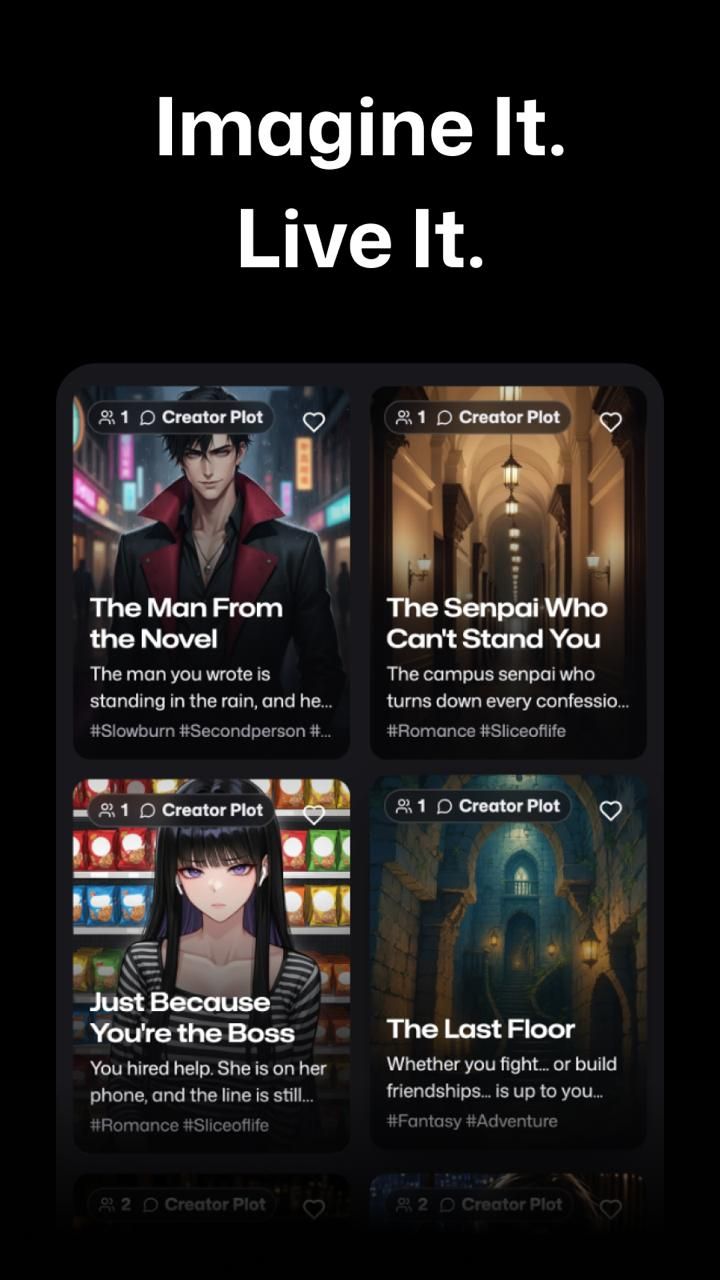
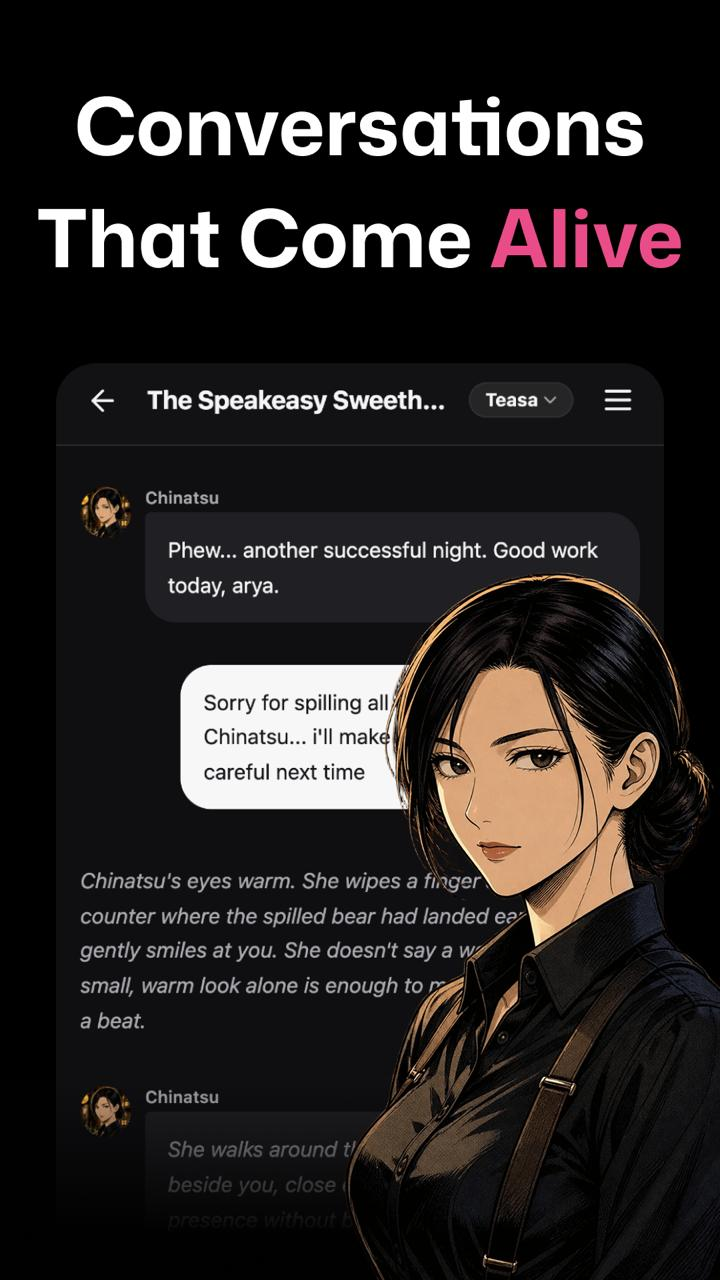
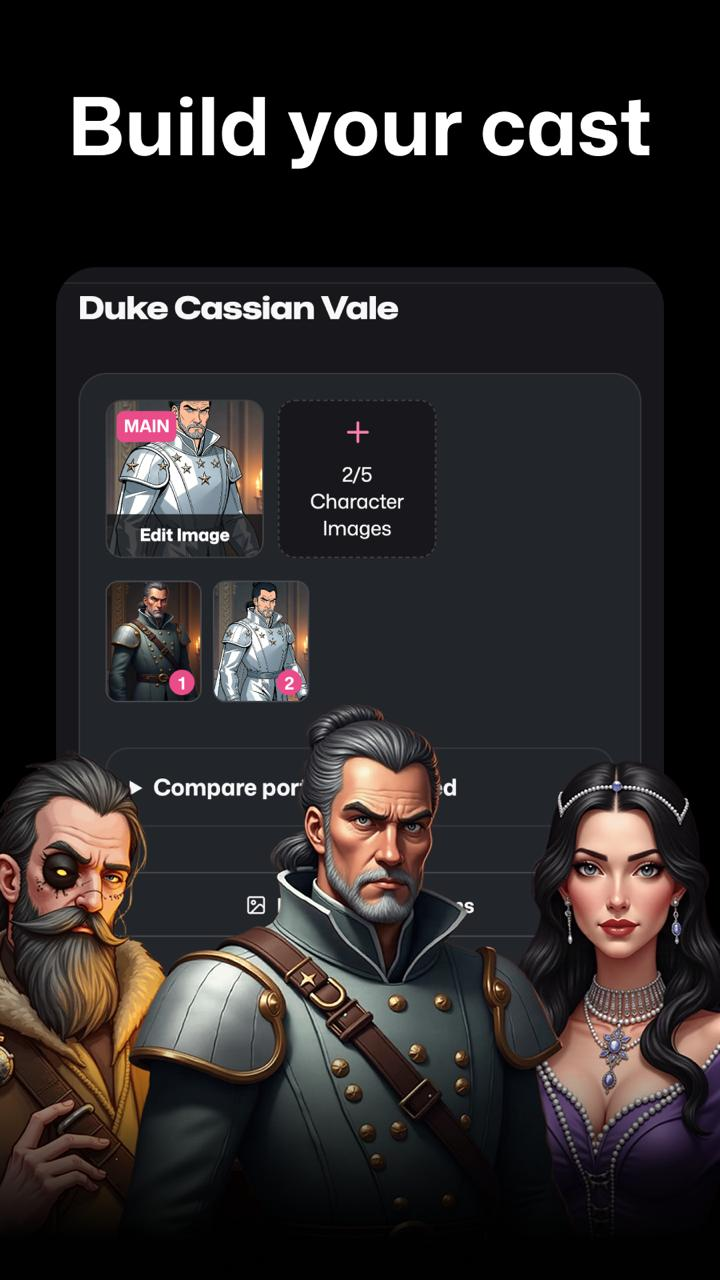
How Teasa works: Stories, quests, milestones and direct chat
Character.AI's unit is the persona: pick a Character, or a Scene someone else authored, and the conversation is whatever you and the model make of it from there. Teasa's unit is the Story — a scene already staged with an opening, a role for you, and a cast with something at stake before your first message. A Story can carry up to 20 quests and up to 80 relationship milestones across its cast, each authored to fit that world rather than generated on the fly. Quests give you a current objective with progress kept in History; relationship milestones track the moments you actually earn with a Character as bond progress in History. Outside the story, any Character is a direct message away — about what just happened in the scene, or about something else entirely.
Those direct chats are free and unlimited, and Teasa Pass adds the Oolong chat style and lets eligible Characters look up real-world information and show their sources when it's useful to the conversation. If you're specifically after a Character AI alternative with memory you can actually see, rather than an automatic system working in the background, the Memory panel lists what's been collected about you per Character, with a control to forget any of it and a setting to pause new collection entirely.
Build the Character you want to meet
Instead of choosing from a catalog of millions of personas, Creator Studio lets you define a Character's voice, backstory and relationships from scratch. Use a character card to set identity and speech patterns, and a Lorebook to hold the world knowledge your Character should know — Teasa's own version of the worldbuilding Character.AI's Lorebooks support. Add an opening scene, quests and relationship milestones so meeting your Character is staged from the first line, then play-test privately in Creator Studio before you publish.
New to interactive roleplay formats? The full AI roleplay guide walks through how a staged opening, player turns and branching responses fit together in Teasa. The free Blueprint Lab also lets you test when your world information enters a conversation before bringing a draft into Creator Studio.
Where to start with your Character.AI alternative
- Fantasy stories: Full-cast worlds with real stakes, the closest match to Character.AI's biggest genre.
- Supernatural Romance stories: Vampires, demons and other-than-human love interests with an authored arc behind them.
- Isekai & Reincarnation stories: For readers who came to Character.AI for the sheer number of worlds to drop into.
- Idols & Celebrities stories: A close match to Character.AI's persona-heavy catalog, told as an actual story with you in it.
Browse Teasa Characters if you'd rather pick a cast member first, or open Creator Studio to build your own.
Bring your Character.AI chats. Switching doesn't mean starting over: you can import your Character.AI chats and pick the characters you want to keep playing, up to 30 at a time. Each one continues on Teasa as a private Story that picks up where your latest chat left off, with your earlier chats remembered as the story so far.
From the first scene to everyday chat
- Browse Teasa Characters or a genre you like — the collections above are good starting points — and pick a Story whose opening makes you want to reply.
- Write your own dialogue or action instead of picking from a persona list. In a Story with quests or relationship milestones, pursue the objective and check History for what you've earned.
- Open Characters, pick someone and tap Message to start a direct conversation — about a decision from the story, a film you watched, or just how your day went. Agree on a date and Teasa writes it as a private Story for the two of you, ready to play in the chat.
- Open your Memory panel any time to see what's been saved and remove anything you don't want kept.
Compare more apps like Character.AI
Still weighing your options? See how Teasa compares to Talkie AI, which layers a card-collecting game on top of persona chat, the Chai app, a mobile-first catalog with paid tiers, and Zeta AI, a roleplay-focused chat platform popular in Korea and Japan.
See all AI roleplay apps compared: Teasa, Character.AI, Chai, Janitor AI, Perchance, Talkie, PolyBuzz, Yollo AI, Replika, Nomi, Kindroid and SillyTavern side by side on story, memory, languages and free tier.
FAQ
Where can I go if Character AI shuts down?
Character.AI stays up during its Chapter 11 sale, which it expects to finish by the end of November or early December 2026. Request your data export now, save your characters' names, greetings, descriptions and definitions, and keep chatting on Teasa: your first 20 turns need no sign-in, DMs with any Character are free and unlimited on a free account, and Creator Studio recreates a saved character in about a minute.
What is the best Character.AI alternative?
The best Character.AI alternative in 2026 depends on what's driving your search. If you want the character variety without the content-filter friction, Teasa's Stories, quests and relationship milestones give a Character conversation structure and staying power without an age gate on the core experience.
Is there an app like Character.AI without the constant refusals?
Teasa builds every Character around an authored Story rather than an open-ended chat with shifting moderation. Quests and relationship milestones give the conversation a clear direction, and the cast responds to what actually happens in the scene rather than a persona reacting to any prompt you type.
Is Teasa similar to Character.AI?
Both let you chat with AI Characters, but Teasa builds that chat around an authored Story with an opening, a cast and a role for you to play, plus quests and relationship milestones that track what you've earned. Character.AI centers on choosing a Character or Scene from a very large community-made catalog and chatting directly.
Does Teasa have an age requirement?
Teasa is rated for ages 13 and up, and every catalog Story is reviewed before it is published. Its Stories, quests, relationship milestones and Character chat work the same way for every account.
Can I make my own AI character instead of picking from Character.AI's catalog?
Yes. Creator Studio lets you define a Character's voice, backstory and relationships, write their opening scene, and add quests and relationship milestones, then play-test privately before publishing — no catalog slot required.
Does Teasa remember our past conversations the way Character.AI's memory tools do?
Teasa's Memory panel lets you review and delete character-scoped facts that have been saved, and pause new collection entirely — built for transparency and control rather than a black-box memory layer. Compare that directly against Character.AI's memory tools before assuming either one remembers everything.
Is Teasa free to try?
You can start playing Stories for free. Direct messages with any Character are free and unlimited. Teasa Pass adds the Oolong chat style and live web lookup with sources in direct chats; Story and other service limits are separate. Current plan prices appear in your purchase screen.
Can I bring my Character.AI chats to Teasa?
Yes. Import your Character.AI chats from Character.AI's own data export, which can take three to four weeks to arrive and comes with a download link that works for seven days, or from chats saved with the CAI Tools extension as Tavern or Oobabooga files. Importing is free, your first import adds 3 days of Teasa Pass, and each imported Story appears in Chats on the web and in the Android app.
 The Chairman Who Talks Smooth
 The Woman Hating Knight Captain
 She Sat Beside Your Boyfriend
 The Tyrant Emperor Is Sweet
 Whose Arms Held You This Morning
 Seo Yi-hyun