 teasa.ai


In this guide
Quests and milestones track different things
A quest tracks what the player does in one playthrough; a milestone tracks what grows between the player and one Character, wherever that Character appears.
| Story quests | Relationship milestones | |
|---|---|---|
| Written in | Story editor, Advanced tab, Quests | Character editor, More, Relationship milestones |
| Limit | Up to 20 per Story | Up to 20 per Character, 80 across a Story's cast |
| Belongs to | One playthrough and the path the player chose | The player's account and that Character |
| Player sees | The quest list, with rewards and progress | Moments, a bond stage and progress in Bond |
| Pays | Quest Gold set by the creator | Bond progress |
| Needs memory on | No | Yes |
Quests carry the plot: find the letter, win the duel. Milestones carry the relationship: the first time a guarded Character uses your name.

How Story quests work on Teasa
A Story quest is four fields and a mode. Open your Story in Creator Studio, go to the Advanced tab and find Quests. Add quest opens a row with:
- Quest title (up to 100 characters): the name the player sees.
- Player description (up to 600): what the player is asked to do.
- Done when (up to 500): the event that completes it, kept private. The editor's note: "One thing that really happens in the scene. Plans and promises don't count. Players never see this."
- Gold reward: what the quest pays.
Under Quest order, pick In order ("One quest at a time, in this order.") or Any order ("Every quest available from the start."). In order, Teasa checks only the first unfinished quest and reveals the next once it is done. In any order, every unfinished quest is checked after every reply.
A completed quest ticks off in the player's quest list and pays its Gold on a published Story. It never locks content, forces the player's hand or ends the chat.
Progress belongs to the playthrough. A new chat starts fresh, a branch keeps only the completions on its own path, and deleting the reply that earned a quest removes the completion. Publishing quest edits updates every existing playthrough. Reword a quest in place rather than deleting and re-adding it: an edited quest keeps players' progress, while a replacement counts as brand new.
Quest Gold: what creators attach and what players buy
Every Story can pay out 50 Gold in all (Gold players can earn), and each quest pays at most 5. Type 0 to 5 into Gold reward, or leave it empty and the quest takes an equal share of what is left, still capped at 5; Split evenly clears typed amounts so every quest shares the budget. Ten or fewer quests can all pay 5; twenty share it at 2 each.
Players collect a quest's Gold once per account, however often they replay. Gold is paid only on public, approved Stories and never to their creator; Test your Story tracks completions without paying, so test each condition there.
Gold is Teasa's earned currency, never sold and separate from Gems. Players earn it from quests, and from rewarded ads where offered, then spend it on Matcha and Earl Grey replies once their free replies are used (35 Gold each), Imagine a scene (300 Gold) or Unlock a date for an extra Date (400 Gold).
How relationship milestones work
A relationship milestone is a hidden moment written on a Character: players see it only after they reach it. Open the Character in Creator Studio, open More and find Relationship milestones. Add milestone gives you two fields:
- Label (up to 60 characters): the moment's name, shown to the player once earned.
- How players reach it (up to 300): the event, naming who does what (the editor's example uses its placeholders for the Character and the player). The hint: "Describe what interaction needs to happen: what must actually happen in the scene. Intent or hints do not count."
Each Character holds up to 20 milestones, and a Story's cast up to 80; the Story editor's Advanced tab shows the cast's total with Edit in Cast. Cast someone from Your Characters (or Create a Character here) and write their milestones in the Character editor. A Character with no authored milestones earns four default moments: Opening up, Laughing together, Trust and Feelings confessed. Write your own to make the bond specific.
Teasa checks the Characters present in each finished exchange. Markers never enter the Character's instructions, so each moment has to grow out of the scene. Once earned, a milestone stays earned wherever that Character appears, until the player resets the Character or deletes the chat that earned it.
Milestones are collected only while memory is on (the Remember things about me setting), and Test your Story does not award them, so check them in a regular chat after publishing.
A new milestone plays a short celebration with its label and a count such as "Moment 2 of 5". The Bond sheet in the chat's options shows each Character's moments and a bond stage: Just met, Getting closer, Trusted, Close and Inseparable. The stage follows the share of moments reached, so three milestones move it in big steps and twelve move it gradually.
Couple, engaged, married or broken up: relationship status
Relationship status needs no authored marker: Teasa notices when a player and a Character become a couple, get engaged, marry or break up. A clear change is recorded with a short moment ("You're together now"); a breakup gets one quiet line. A likely change becomes a question in the chat, "Are you and {name} a couple now?", with We’re together and Not yet. Players can also set it by hand: Change relationship in the Bond sheet offers Together, Engaged, Married and Broke up.
A relationship that starts in a Story stays in that Story conversation, and one made in direct messages stays there. The Character carries it into later replies. Players can remove any change under What Teasa remembers in Settings. Status tracking, like milestones, runs only while memory is on.
For creators: a relationship your premise already sets ("you are his wife") is the starting point, not a change. If you want the proposal to count, start the pair before it.
Worked example (authored): The Comet Ledger
An authored example: a small Story with three quests and three milestones, as field values to paste into Creator Studio. Elias Wren, an adult astronomer, runs a mountain observatory; the player arrives as his new assistant.
Story fields (Basics, then Advanced, World)
Title: The Comet Ledger
Short public premise: A comet returns in three nights. The observatory's
logbook is missing, and its astronomer would rather work alone.
Private story direction: The old director hid the comet logbook in the
dome's map cabinet. The telescope's clock drive is jammed and takes two
people to free. The comet clears the eastern ridge on the third night.
Quests (Advanced, Quests)
Quest order: In order

1. Quest title: Find the missing logbook
   Player description: The comet log vanished with the old director.
   Find it.
   Done when: The player finds the missing comet logbook.
   Gold reward: 5

2. Quest title: Restart the clock drive
   Player description: The great telescope cannot follow the sky. Help
   Elias repair its clock drive before the comet rises.
   Done when: Elias and the player get the telescope's
   clock drive running again.
   Gold reward: 5

3. Quest title: Watch the comet together
   Player description: Be at the eyepiece with Elias on the third night.
   Done when: The player and Elias see the comet
   through the telescope.
   Gold reward: 5
Elias Wren's milestones (Character editor, More, Relationship milestones)
Label: Call me Elias
How players reach it: Elias asks the player to call him Elias instead of Doctor Wren.

Label: The chart he keeps to himself
How players reach it: Elias shows the player the hand-drawn star chart he never
shows anyone.

Label: Why he left the city
How players reach it: Elias tells the player the real reason he gave up his
university post.
Each milestone has its seed in Elias's Definition: he insists new staff call him Doctor Wren, keeps a hand-drawn chart of the sky over his childhood home, and left the university after someone else took credit for his discovery.
Why it works: each quest is one event the storyteller can stage, seeded in the private direction, and In order follows the plot (no comet before the drive runs). The milestones sit early, middle and late, and none needs the comet, so they fit any Story Elias joins. The quests use 15 of the 50 Gold.
Too vague, then fixed
Too vague
Quest title: Win Elias's trust
Done when: Elias trusts the player.
Trust is a feeling, not an event. No single exchange shows it, and the player has no idea what to do.
Fixed
Quest title: Earn the dome key
Player description: Elias guards the dome like a vault. Prove you can be
relied on, and he may let you in on your own.
Done when: Elias gives the player his own key to the
observatory dome.
Add one line to the private story direction so the event can happen: "Elias keeps the only spare dome key and gives it to someone he relies on."
Write a quest the AI can recognize as done
A good completion condition names one concrete event a single exchange can show. Four habits:
- One event, one moment. Teasa judges each condition against the newest exchange. Counters ("help five villagers"), multi-stage goals, failure states and time limits are outside what a quest tracks; split a big goal into several quests.
- Seed it in the Story. Completion conditions never reach the storyteller, so the opening, private story direction, world rules or a Definition must make the event possible. If nothing mentions a logbook, nobody will find one.
- Name who and what. "The player returns the lost compass to the station keeper" beats "the compass is dealt with".
- Choose the order by the plot. In order suits a chain where each step opens the next; there, doing step three early does not count. Any order suits side goals met in any order.
Let the Player description carry atmosphere; write the condition like a stage direction.
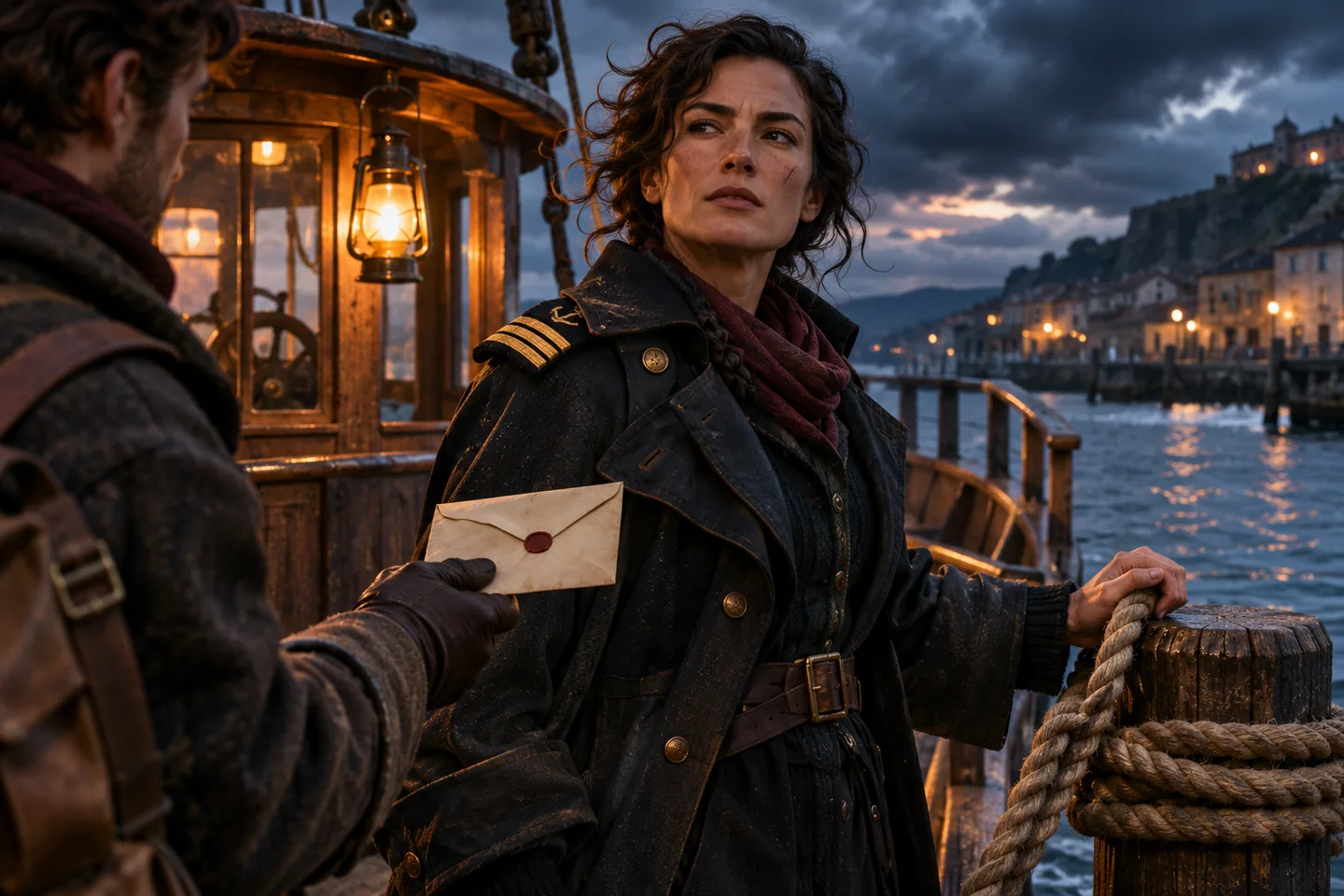
Space milestones across the relationship
Spread milestones across the relationship the way a novel spreads its turning points. Put one within reach of an early scene, so a new player feels the bond move, and save the biggest for later.
- Give the Character the material. Markers never reach the Character's instructions, so the reason for each moment belongs in the Definition: the secret, the habit, the thing they guard.
- Write moments that travel. Milestones belong to the Character, not the Story. Moments rooted in who they are (a name, a confession, a kept promise) work in every Story that casts them; Story-specific beats belong in quests.
- Fewer, sharper moments. Each milestone plays a celebration: a handful, well spaced, feels earned; a dozen in the first scene feels like noise.
Common mistakes
- Vague goals. "Gain her trust", "become friends", "fall in love". Rewrite each as the event that proves it: she lends you her cloak, he calls you by your first name, she asks you to stay.
- Magic words. "How players reach it: the player says the word Andromeda." Players never see conditions, so nobody guesses the word, and saying it proves nothing about the relationship.
- Too many at once. Twenty milestones on one Character, or any-order quests that all resolve in the opening scene, give a pile of ticks and no arc.
Build the rest with how to create an AI Story, see what Characters keep between chats in AI character memory, and write a Definition milestones can grow from with the character-card workshop. The lorebook guide shows how to seed world facts, and the Help Centre's quests and milestones and Gold pages cover the player side. Then open Creator Studio and add your first quest.
FAQ
Do quests work when memory is off?
Yes. Quests ignore the memory setting. Milestones and relationship status are collected only while Remember things about me is on; turning it off keeps what was earned.
Can a player earn the same quest's Gold twice?
No. Each quest pays once per account, whatever the replays, chats or republished versions. Deleting the reply that earned it removes the completion but not the Gold.
Can players see the completion conditions?
No. Players see the quest title and description; the private Done when condition and unreached milestones stay hidden. With In order, they see only the current quest and the ones already done.
Why didn't my milestone trigger?
Check that memory is on, the chat is not a draft test, the Character is in the scene, and the event happened rather than being planned or hinted at. If the Character has no reason to do it, add one to the Definition.
 Cruel Knight Captain
 Zero Day Marriage to the App Developer
 The Doting Husband Is a Boss
 Let's Break Up Then
 The Wolf Who Sat Down with a Vampire
 The Lawyer You Bicker With